
Berapa lama masa pakai aktuator pneumatik industri?
2026-07-29 Blog
What Is the Service Life of Industrial Pneumatic Actuators?
Pendahuluan
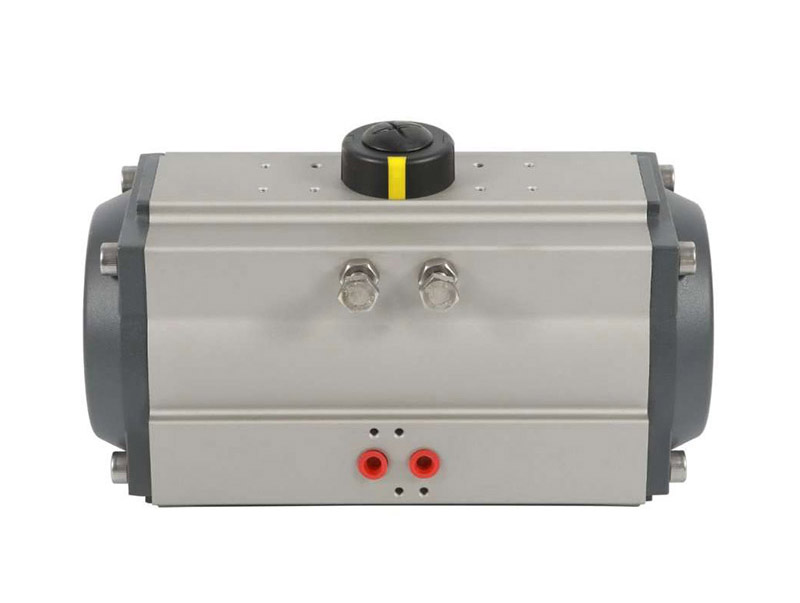
For industrial operators, equipment longevity directly impacts operational costs and production reliability. Pneumatic actuators serve as critical components across fluid control systems, so buyers often ask about their expected service life. In practice, industrial pneumatic actuators do not follow a single fixed lifespan. Instead, their durability depends on multiple interconnected factors that vary by application and operating environment. This guide breaks down the key variables that shape actuator performance over time, and it offers practical insights for procurement and engineering teams.
Typical Service Life Range for Standard Applications
Under normal operating conditions, well-maintained industrial pneumatic actuators can deliver 1 to 3 million cycles of reliable service. For most process industries, this performance translates to roughly 10 to 15 years of continuous use. However, this baseline only applies when systems run within rated pressure, temperature, and duty-cycle limits. For example, rack-and-pinion models commonly used in water treatment plants often reach the upper end of this range. In contrast, high-cycle packaging lines may see shorter service windows despite identical actuator specifications. As a result, manufacturers rarely quote absolute years and instead reference cycle counts for accuracy.
How Operating Conditions Affect Actuator Longevity
First, temperature extremes place significant stress on internal seals and metal components. Cold environments stiffen elastomer parts and accelerate wear during movement. High heat, on the other hand, softens seals and reduces their effective sealing capacity over time. Second, corrosive atmospheres common in chemical and offshore facilities degrade housing surfaces and internal mechanisms faster than clean indoor settings. Third, frequent pressure spikes or supply air contamination introduce abrasive particles that scratch cylinder walls and damage piston rings. Finally, duty cycle frequency matters because continuous 24/7 operation naturally produces more mechanical fatigue than intermittent use.
The Role of Maintenance in Extending Service Life
Proactive maintenance represents one of the most effective ways to maximize pneumatic actuator lifespan. For instance, regular lubrication of moving parts reduces friction and prevents premature seal failure. Similarly, filter replacement in the air supply line keeps contaminants away from sensitive internal components. Most manufacturers recommend quarterly inspections for critical service applications and annual overhauls for standard duty units. During these checks, technicians examine seal condition, torque output, and mounting hardware integrity. When teams address small issues early, they avoid cascading damage that shortens overall equipment life. In many cases, scheduled rebuilds can double the expected service period of an actuator.
Material and Build Quality Differences Across Brands
Construction quality directly influences how long industrial pneumatic actuators perform without failure. Premium models use hard-anodized aluminum bodies and stainless steel fasteners for enhanced corrosion resistance. Budget alternatives often skip these protective treatments and degrade faster in harsh industrial settings. Seal material selection also matters greatly. Nitrile rubber works well for general-purpose use, but Viton or EPDM seals perform far better in extreme temperature or chemical exposure. Furthermore, precision-machined internal components maintain tighter tolerances and produce smoother motion over millions of cycles. For procurement teams, initial purchase price rarely reflects total cost of ownership across the full product lifecycle.
Failure Patterns and Warning Signs to Monitor
Even with proper care, pneumatic actuators show predictable signs as they approach end-of-life. Most commonly, operators notice gradual torque loss that slows valve response during actuation. Air leakage around the shaft or end caps also indicates worn seals that require immediate attention. Increased operating noise or uneven movement may point to internal component wear or lubrication depletion. In critical safety applications, these warning signs warrant prompt replacement to prevent unplanned shutdowns. Facilities that track cycle counts and performance metrics can plan replacements during scheduled downtime rather than reacting to emergency failures.
Conclusion and Practical Procurement Guidance
In summary, industrial pneumatic actuators offer flexible service life that ranges from several years to over a decade. Actual performance depends on operating conditions, maintenance practices, and initial build quality rather than generic manufacturer claims. For procurement professionals, selecting actuators matched to specific environmental demands delivers the strongest long-term value. Pairing quality units with disciplined maintenance programs ensures consistent performance and lowers total lifecycle costs. By understanding these factors, engineering and supply chain teams can make informed decisions that balance upfront pricing with reliable, long-term operational performance.
Produk Terlaris
Hubungi kami
Alamat: Ruang 203-1, Lantai 2, Blok A, No. 9 Jalan Xinqin, Distrik Xinwu, Kota Wuxi, Provinsi Jiangsu, RRT
Nomor Ponsel: 0086-188-5271-7918
Email:william@wxaccton.com
Situs web: www.actuator-china.com